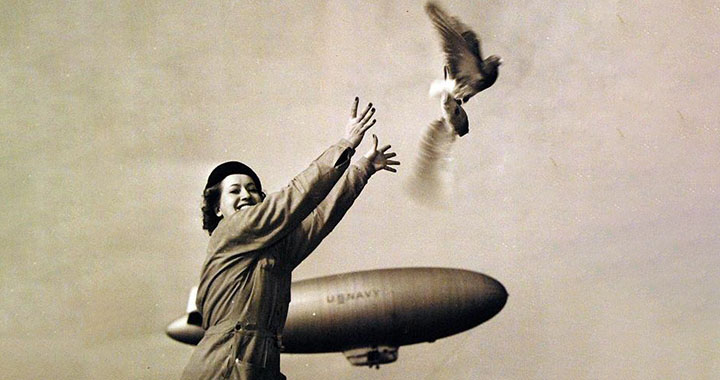
During WW II, the Navy used K-class blimps (airships) for patrol and anti-submarine missions. They were very good at this! The main challenge was that their radio transmissions could be detected, direction-found or intercepted by enemy forces (including U-boats). When a blimp needed to report a contact but could not risk transmitting, they released a trained pigeon to send the information without emitting radio signals. If they spotted a sub, the crew wrote sighting details (bearing, estimated range, description, time) on lightweight/waterproof paper and placed it in a tiny canister attached to the pigeon’s leg. The pigeon was then released and flew straight to its home loft (usually at a coastal base or other fixed station). The receiving station would then alert escort ships or aircraft without the blimp ever having sent a radio call. To learn more about this fascinating chapter in Naval history, please check out this Military.com article.